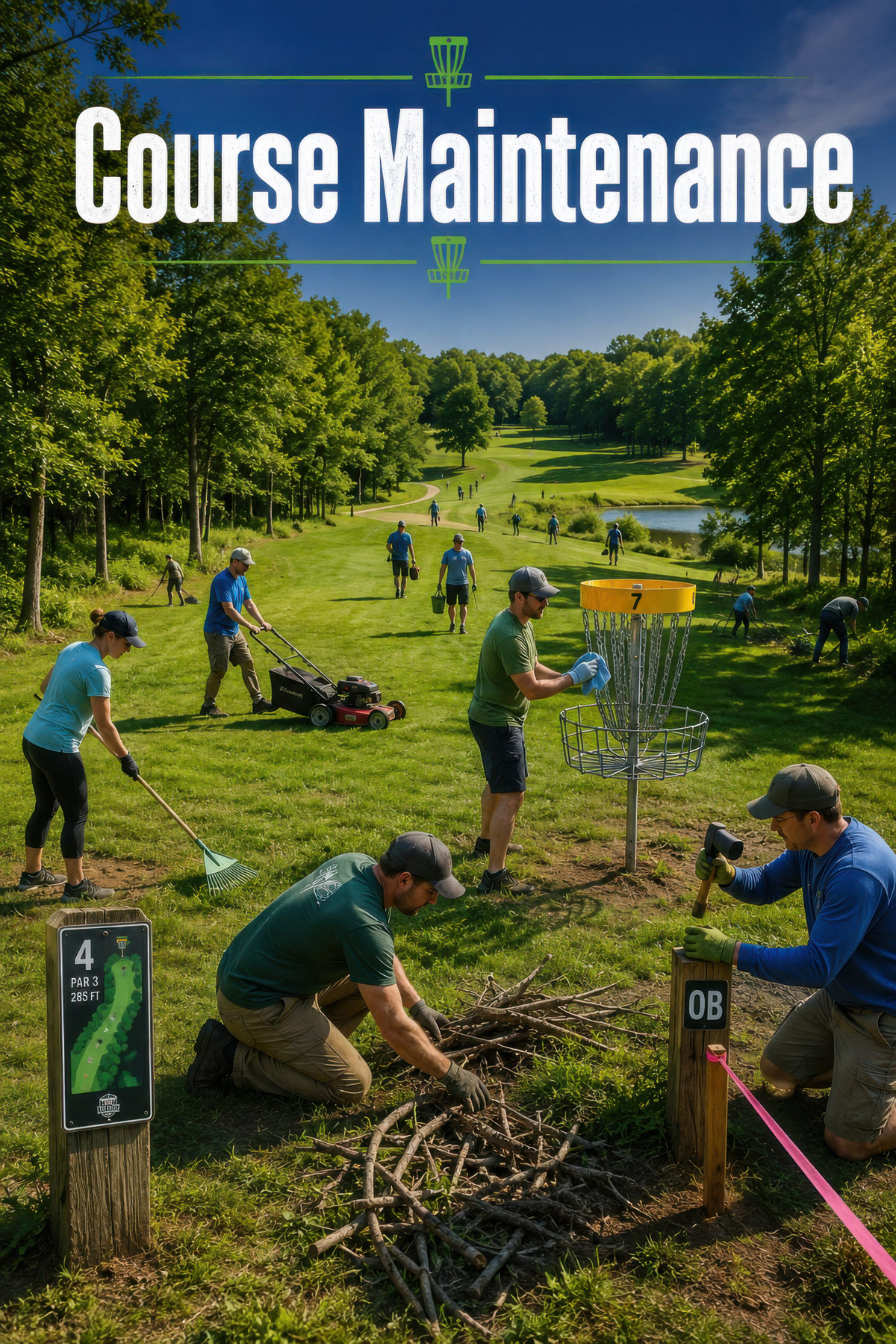
Course Maintenance
Definition: Course maintenance refers to the ongoing work required to preserve, improve, repair, and manage a disc golf course so that it remains safe, playable, environmentally sustainable, and enjoyable. Course maintenance is an essential but often underappreciated foundation of the sport. Most public disc golf courses depend heavily on volunteer labor, local clubs, parks departments, and community stewardship rather than large professional maintenance staffs. Private disc golf courses are often offered more for love than money and always welcome an assist from the public in achieving the best presentation for continuing enjoyment. Course maintenance includes tasks such as mowing fairways, trimming vegetation, clearing fallen trees, repairing tee pads, maintaining signage, managing erosion, emptying trash, preserving basket integrity, and protecting environmentally sensitive areas. Thoughtful maintenance directly shapes how a course plays by influencing fairway definition, visibility, safety, drainage, rough severity, and strategic balance. Because disc golf courses exist within changing natural environments, maintenance is a continuous interaction between players, land, weather, and course design.
Why It Matters: Course maintenance preserves both the playability and long-term survival of disc golf courses. Poor maintenance can lead to unsafe conditions, unfair play, environmental damage, erosion, inaccessible fairways, and declining player experience. Strong maintenance supports consistent competitive conditions, protects land enjoyment, and ensures that courses remain functional and welcoming for future generations of players.
Term Observations:
- Volunteer labor from local clubs and community members supports a substantial portion of course maintenance throughout the disc golf world.
- Seasonal weather patterns create dramatically different maintenance challenges, including overgrowth, mud, erosion, fallen limbs, flooding, or snow-related damage.
- Well-maintained fairways preserve intended course architecture by ensuring strategic lines remain visible and reasonably playable.
- Erosion control is one of the most important long-term maintenance concerns on heavily used courses, particularly around tee pads, greens, and steep slopes. Courses that include water features such as ponds or streams or significant elevation changes generally require a higher level of maintenance.
- Intensified maintenance efforts usually accompany tournament preparation, including fresh mowing, temporary OB installation, debris removal, and signage updates.
- Some players underestimate how rapidly heavily trafficked courses deteriorate without consistent maintenance and stewardship.
- DiscLula has been blessed with the constant loving stewardship of Jody McCall, our Director of Operations, and he has received able assistance from Elizabeth Cansler. DiscLula has a tipping box for them attached to the building at the signup station and tips can be sent by Venmo to @NGCTP.
© 2026 North Georgia Canopy Tour Property, LLC d/b/a DiscLula. All rights reserved.