Flight Numbers
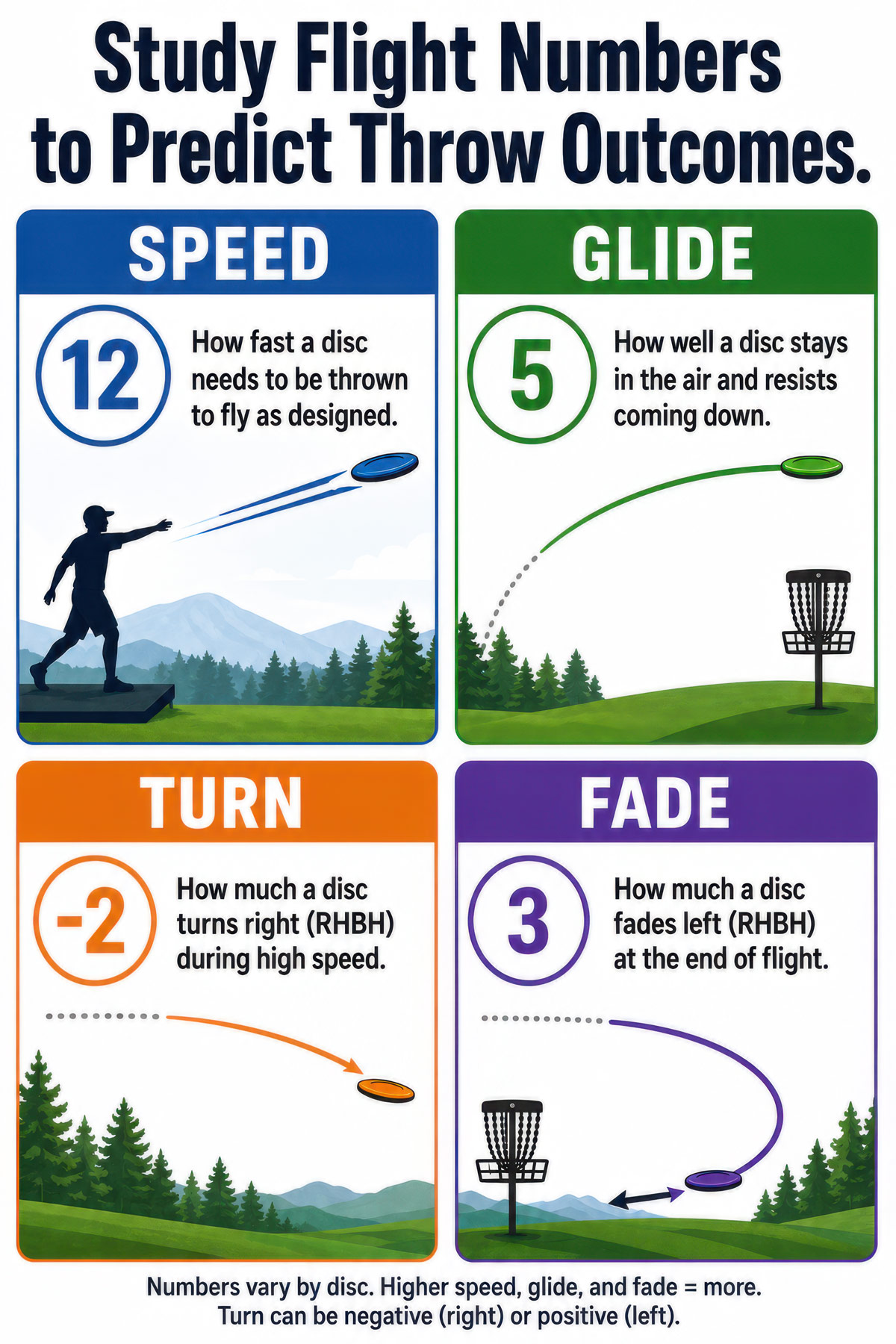
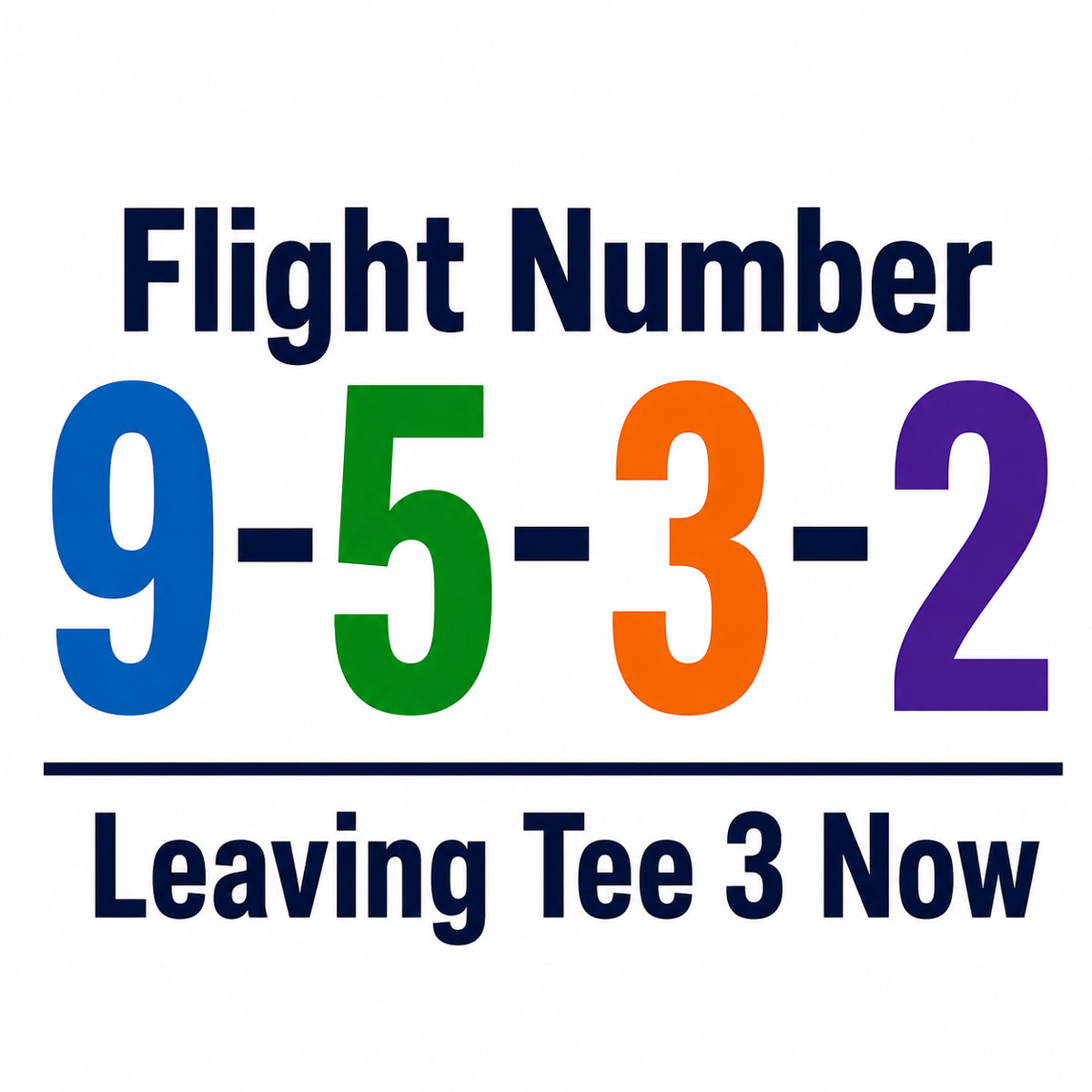
Definition: Flight numbers are the standardized numerical ratings used to describe the expected flight characteristics of a disc golf disc. Most modern discs are assigned four flight numbers that represent speed, glide, turn, and fade, allowing knowledgeable players to predict how a disc is designed to perform when thrown under typical conditions. These ratings are a shorthand system that allows players to compare discs across different models and manufacturers. Flight numbers do not guarantee a specific flight path, as actual disc performance is affected by throwing power, release angle, spin rate, wind conditions, disc wear, and elevation. Instead, flight numbers provide a useful reference framework for understanding a disc’s intended behavior. By combining multiple aerodynamic characteristics into a simple numerical format, flight numbers have become one of the most widely used tools for disc selection, flight prediction, and player development.
Why It Matters: Flight numbers help players make informed decisions about which discs to throw and purchase. Understanding flight numbers allows players to anticipate how a disc is likely to behave before ever throwing it, making it easier to build a balanced bag and then select the proper disc for specific situations. Players who understand flight numbers better match discs to their throwing power and skill level, improving consistency and confidence. Flight numbers provide a common language for players to compare discs, discuss equipment, and understand the relationships between speed, glide, turn, and fade. While experience ultimately teaches how a particular disc flies, flight numbers provide the starting point for predicting performance and accelerating player development.
Term Observations:
- Flight numbers typically consist of four ratings representing speed, glide, turn, and fade.
- Speed indicates the velocity required for a disc to achieve its intended flight characteristics; glide measures a disc’s ability to maintain lift and remain airborne during flight; turn describes a disc’s tendency to move opposite its natural fade during the high-speed portion of flight; fade measures the disc’s tendency to finish in its natural direction as speed decreases near the end of flight.
- Different manufacturers may apply flight numbers somewhat differently, causing similar discs to receive slightly different ratings.
- Throwing power, release angle, spin rate, wind, disc wear, and course conditions significantly influence actual flight behavior regardless of a disc’s flight numbers.
- Learning to interpret flight numbers enables players to choose appropriate discs, improve shot selection, and build a useful disc golf bag.
© 2026 North Georgia Canopy Tour Property, LLC d/b/a DiscLula. All rights reserved.