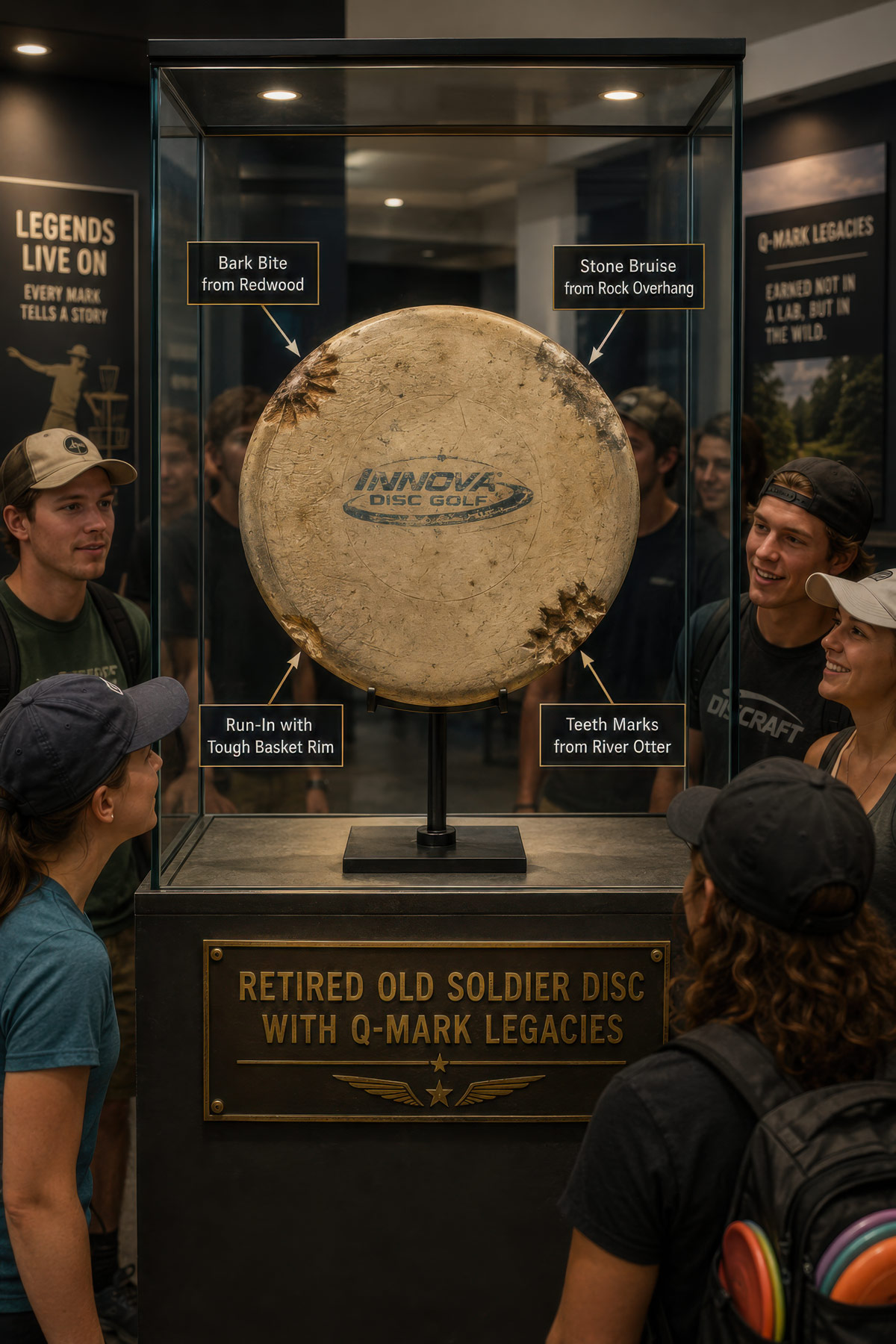
Q-Mark
Definition: A Q-Mark is a scratch, gouge, scuff, dent, or other visible mark left on a disc after striking a tree, basket, rock, concrete surface, or other obstacle during play. The term originated in ball golf, where it refers to a small cut or scrape left on a golf ball after impact, and was adopted by disc golfers to describe similar cosmetic damage to a disc. Most Q-Marks have little or no effect on flight performance, though severe impacts can alter the shape of a disc, changing its stability and flight characteristics. Q-Marks may serve as visible reminders of memorable shots, fortunate kicks, unfortunate collisions, or years of use on demanding courses.
Why It Matters: Q-Marks provide evidence of a disc’s playing history and wear. While minor marks are typically cosmetic, repeated impacts gradually contribute to the aging process and alter a disc’s flight behavior. Players who understand disc wear can better anticipate how a seasoned disc may fly compared to a new one. Q-Marks also highlight the reality that discs are tools designed to be thrown rather than preserved, and many experienced players view a well-marked disc as a badge of use and experience.
Term Observations:
- Most Q-Marks occur when a disc strikes trees, particularly on wooded or technical courses.
- Light scuffs and scratches rarely affect flight performance and are primarily cosmetic.
- Significant impacts can create deeper damage that may alter a disc’s stability, often making it fly differently than intended.
- Players frequently develop emotional attachments to discs that accumulate numerous Q-Marks during memorable rounds or tournaments.
- Premium plastics generally resist Q-Marks more effectively than baseline plastics, although no plastic is immune to wear.
- Some players intentionally season discs through repeated use, accepting Q-Marks as part of the process of creating preferred flight characteristics.
- Tournament players often inspect discs for excessive damage to ensure they remain legal under PDGA equipment standards.
- A heavily marked disc may reveal years of play, countless tree hits, and a long competitive history.
© 2026 North Georgia Canopy Tour Property, LLC d/b/a DiscLula. All rights reserved.