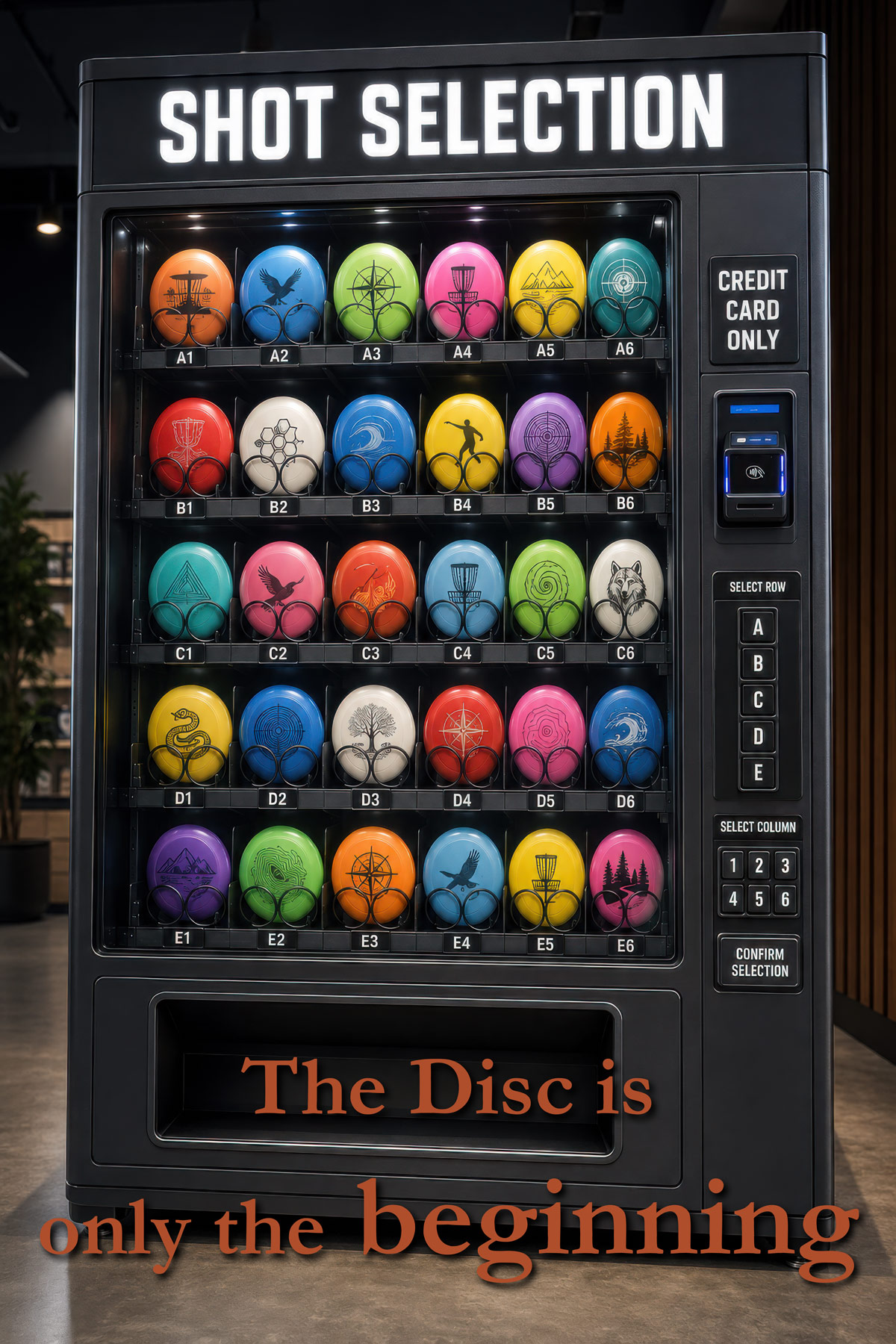
Shot Selection
Definition: Shot Selection is the process of choosing the disc, throw type, flight path, release angle, power, and landing area best suited to a particular disc golf situation. Good shot selection considers the player’s abilities, distance to the target, obstacles, wind, elevation, out-of-bounds areas, ground conditions, and the consequences of a missed throw. It does not always mean choosing the most aggressive or spectacular shot; it means choosing the option most likely to produce a favorable result.
Why It Matters: Shot selection affects scoring, consistency, risk management, and course management. A well-selected shot can avoid hazards, create an easier next throw, and reduce the likelihood of penalty strokes or difficult recoveries. Poor shot selection may require a player to execute a low-percentage line, overpower a disc, challenge unnecessary obstacles, or bring out-of-bounds areas into play. Skilled players match their shot choice to both the situation and the shots they can execute reliably.
Term Observations:
- Shot selection begins with identifying the safest and most effective route to the intended landing area.
- Wind, elevation, distance, obstacles, ground play, and the stability of the available discs can affect the decision.
- The best tournament choice may be more conservative than the shot a player would attempt during a casual round.
- Players should consider not only where a successful throw will finish but also where an imperfect throw is likely to land.
- Shot selection often changes according to the score, the hole, the player’s confidence, and the amount of risk required.
- Strong shot selection allows players to use familiar, high-percentage throws instead of relying unnecessarily on difficult recovery shots.
© 2026 North Georgia Canopy Tour Property, LLC d/b/a DiscLula. All rights reserved.