Spotter
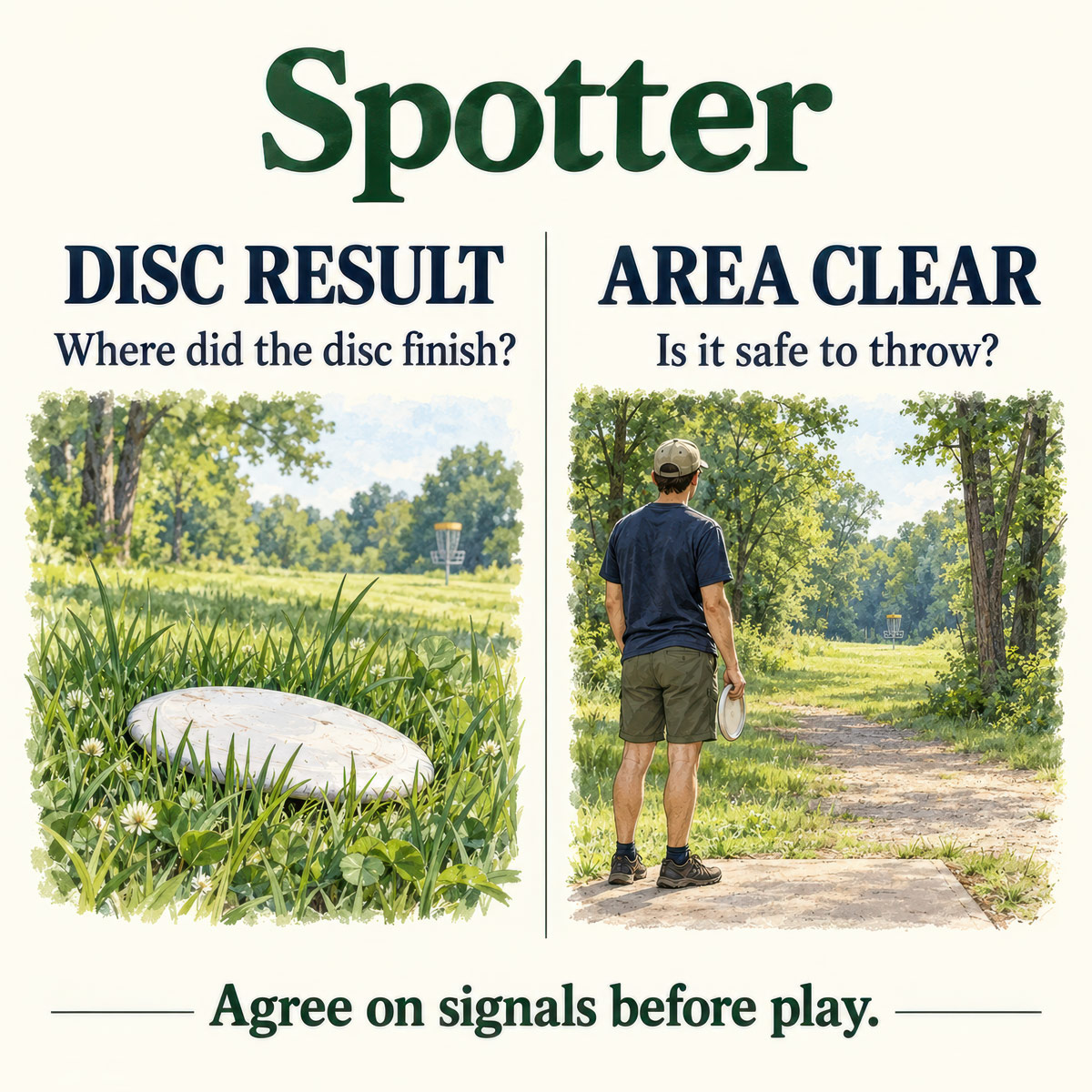
Definition: A spotter is someone positioned to observe a part of the course the thrower cannot see clearly, track discs, and communicate useful information about play. A friend watching a blind landing area may spot during a casual round; a Tournament Spotter has a specific assignment from the Tournament Director. The work can include locating discs, reporting boundary crossings, and signaling when an area is clear. Spotting alone does not confer Tournament Official authority. A better viewing angle provides valuable information, but the applicable rules determine who makes the ruling.
Why It Matters: A disc can disappear over a rise while the important part of its journey is just beginning. It may skip into rough, cross a boundary twice, or finish near people the thrower cannot see. An attentive spotter can replace a long search or a doubtful reconstruction with a useful observation. The benefit depends on communication: players need to know what a signal means, and spotters need to distinguish what they saw from what they suspect. Good spotting supports safety, fair decisions, and steady play without relieving the thrower of responsibility for a safe throw.
Term Observations:
- A spotter lends eyes, not certainty.
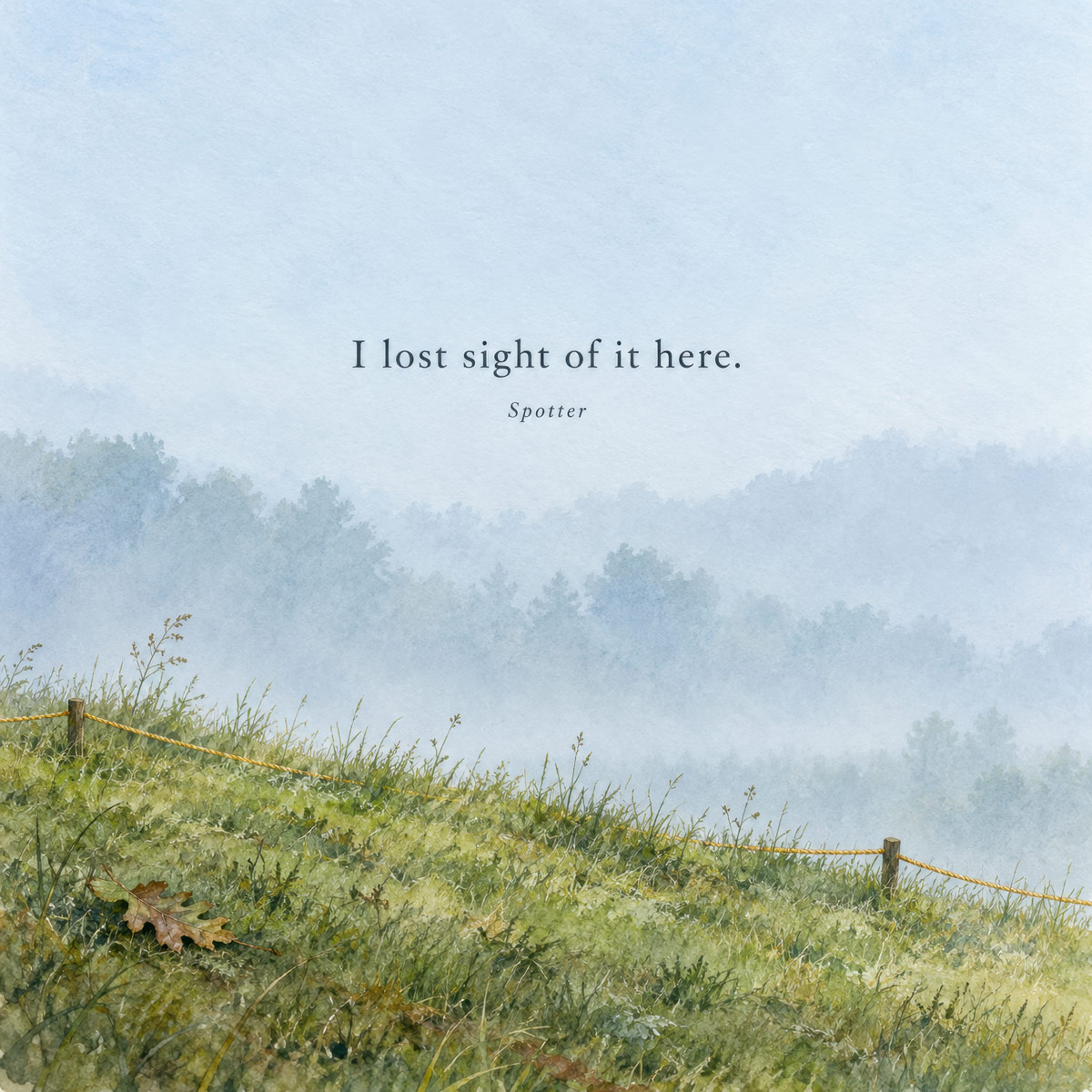
- Imagine a drive vanishing beyond an oak-covered rise. “Beside the pale stump, a few steps downhill” gives the arriving player a place to look. “Somewhere over there” supplies considerably more forest. Follow the whole flight when possible, including the bounce, slide, or roll.
- Agree on signals before the first throw. A green flag commonly reports an in-bounds result; it should not be confused with a separate all-clear signal. Know the event’s system. A hand in the air is useful only when both ends of the fairway understand the message.
- Choose a useful view without becoming part of the shot. Stay clear of likely flight and landing areas, remain alert, and never send a player into a blind area on an assumption. If people enter the throwing area, communicate that play must wait. A spotter is another person to protect, not a target to aim near.
- Report the limits of your view. “I saw it cross the rope, then lost it behind the bank” is more useful than a confident guess. A disc’s boundary crossing and its final resting position are different observations; make clear which one you actually saw.
- Watching is not rescuing. Do not stop a rolling disc to save it from trouble or pick it up merely to be helpful. Leave its resting position available for inspection. Protect people when necessary, but remember that interference can change how the throw must be handled under the rules.
- In PDGA play, an ordinary Tournament Spotter’s ruling generally yields to the group’s. There is an important exception: the Director may give a spotter who is a Certified Official limited Tournament Official authority for specified rulings. Ask what authority was assigned; a flag or a volunteer shirt does not answer that question.
- If the group reaches the disc and finds an ordinary Tournament Spotter’s ruling incorrect, 801.03.D provides the correction procedure. Play continues from the group’s ruling, and the sequence based on the mistaken signal is disregarded. An appeal remains available. Correct the result without making the volunteer the afternoon’s villain.
References:
Professional Disc Golf Association. Sources checked October 28, 2026.
- 801.02 Enforcement. Updated August 14, 2026.
- 1.12 Tournament Officials. Updated December 31, 2025.
- 801.03 Appeals. Updated August 14, 2026.
- 810 Interference. Updated December 31, 2023.
- Competition Manual for Disc Golf Events. Revision January 1, 2026.
- Tournament Spotters Guide. Resource page updated October 29, 2015.
- Spotters Guide PDF. PDF undated; linked from the 2015 resource page.
© 2026 North Georgia Canopy Tour Property, LLC d/b/a DiscLula. All rights reserved.