Wind Types
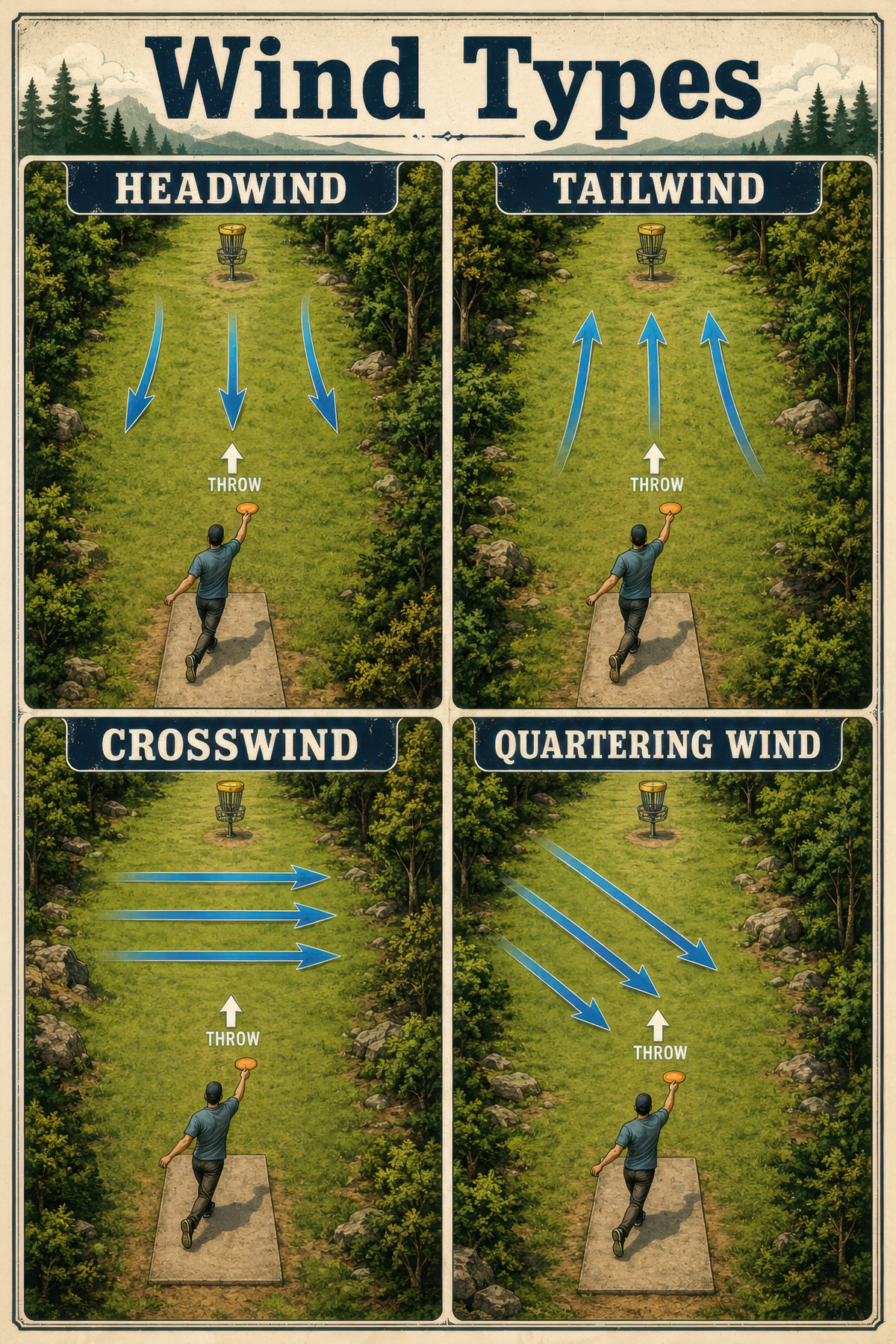
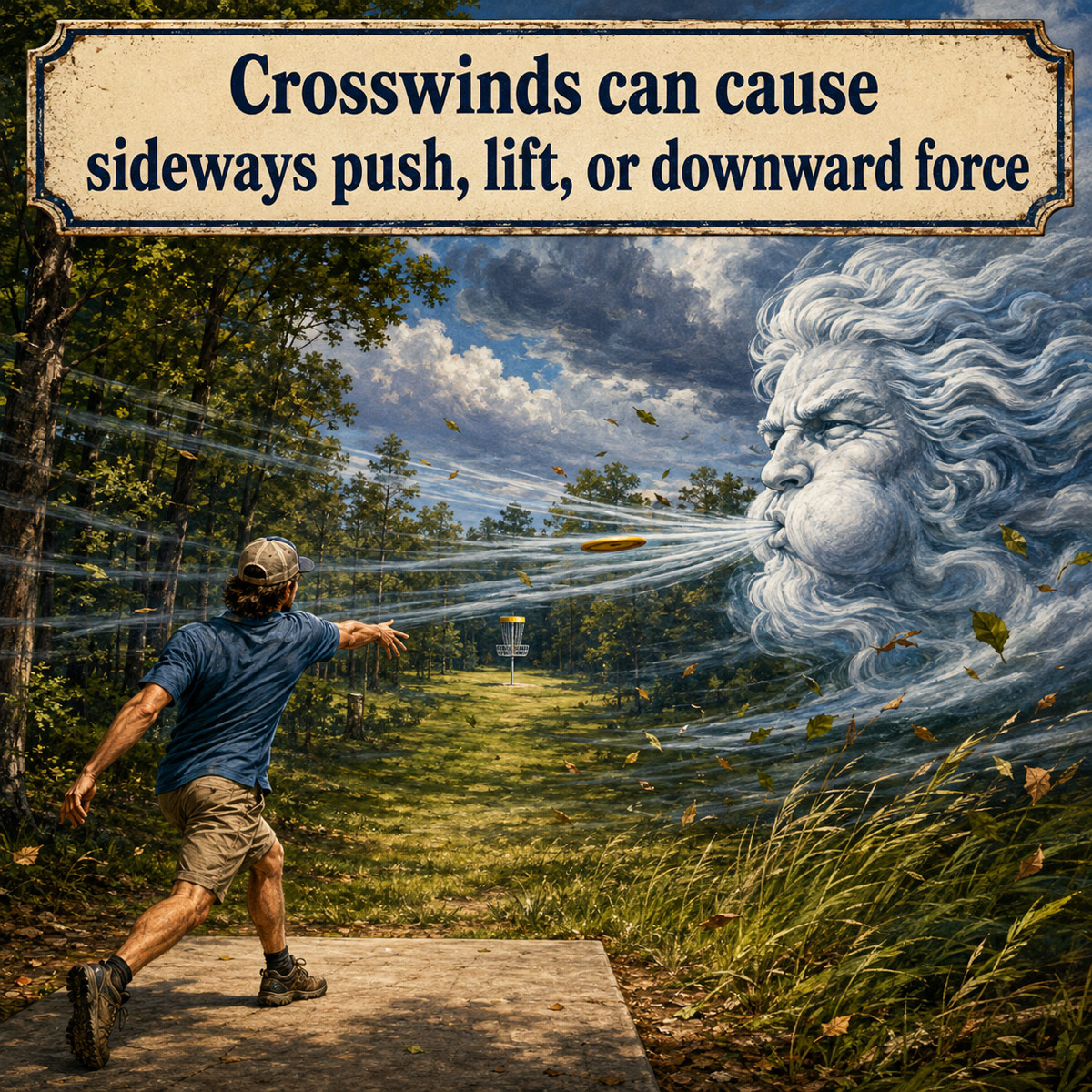
Definition: Wind types describe the wind direction relative to a disc golf throw. A headwind blows toward the player and against the direction of flight, generally making a disc behave more understable and increasing the possibility of turn. A tailwind blows in the direction of the throw, generally making a disc behave more overstable while reducing glide and carry. A crosswind blows across the intended flight path and can push the disc sideways, lift it, or force it downward depending on the disc’s orientation. A quartering wind approaches diagonally and combines the effects of a headwind or tailwind with those of a crosswind.
Why It Matters: Wind type affects disc stability, glide, turn, fade, distance, lateral movement, and landing behavior. Correctly identifying the wind allows a player to choose an appropriate disc, release angle, nose angle, height, and flight path. A poor wind read can cause a disc to turn excessively, fade early, drift away from the target, rise unexpectedly, stall, or lose distance. On the other hand, a player who understands wind types can reduce risk, improve control, and even use the wind to help shape the intended shot.
Term Observations:
- Wind type is determined relative to the intended direction of the throw, so the same prevailing wind may be a headwind on one hole, a tailwind on another, and a crosswind on a third.
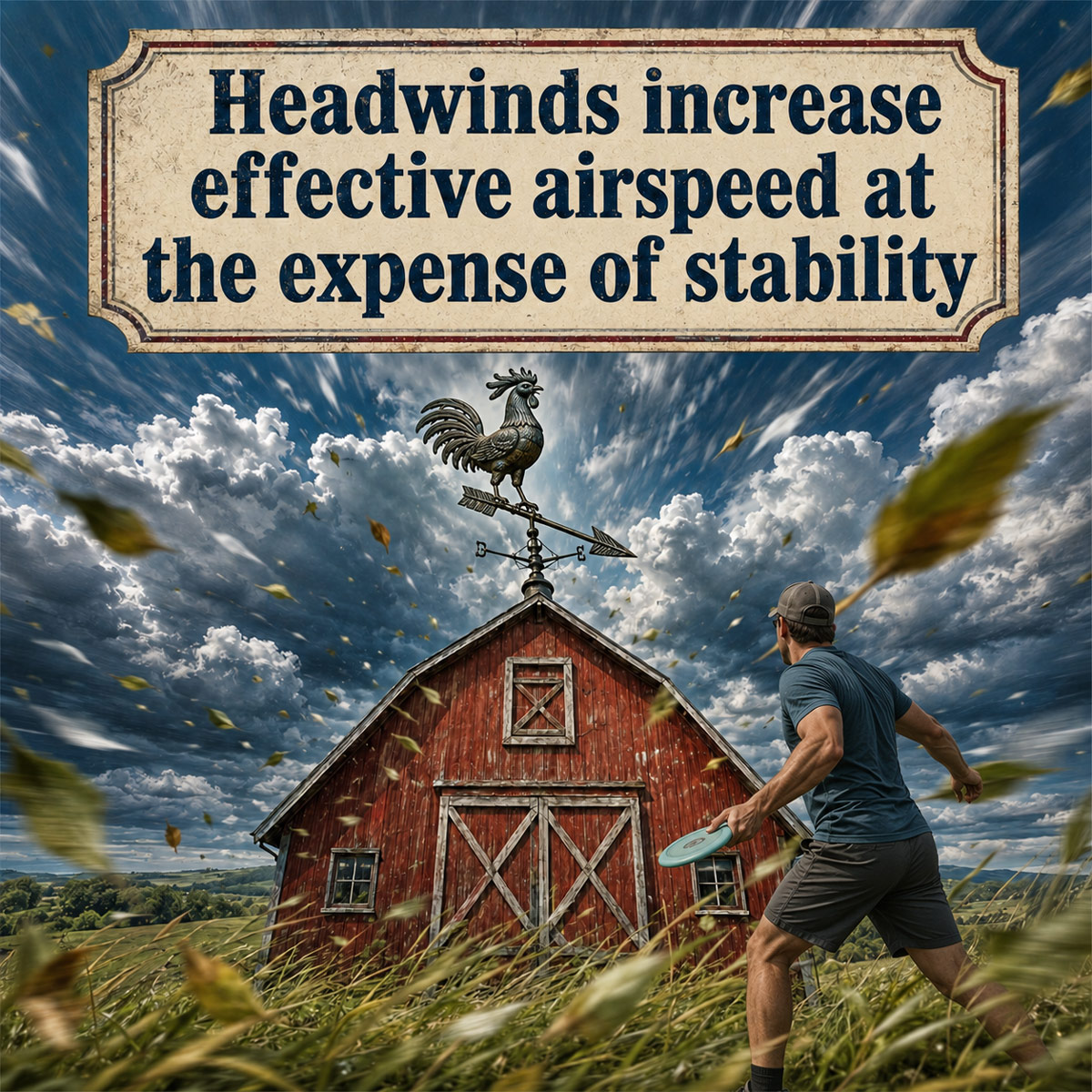
- Headwinds generally increase a disc’s effective airspeed, making understable discs and exposed release angles more vulnerable to excessive turn.
- Tailwinds generally decrease effective airspeed, causing discs to act more overstable and often reducing glide and forward carry.
- Crosswinds have different effects depending on which portion of the disc’s flight plate is exposed to the wind and whether the disc is thrown backhand or forehand.
- Quartering headwinds combine increased effective airspeed with lateral movement, while quartering tailwinds combine reduced effective airspeed with lateral movement.
- Wind near the tee or ground may differ from wind above the fairway, around trees, across open areas, or near changes in elevation.
- Gusts and swirling wind may cause the apparent wind type or strength to change during a disc’s flight.
- Players commonly adjust disc stability, release angle, nose angle, height, and shot selection for the particular wind type they face.
© 2026 North Georgia Canopy Tour Property, LLC d/b/a DiscLula. All rights reserved.