Skip Control
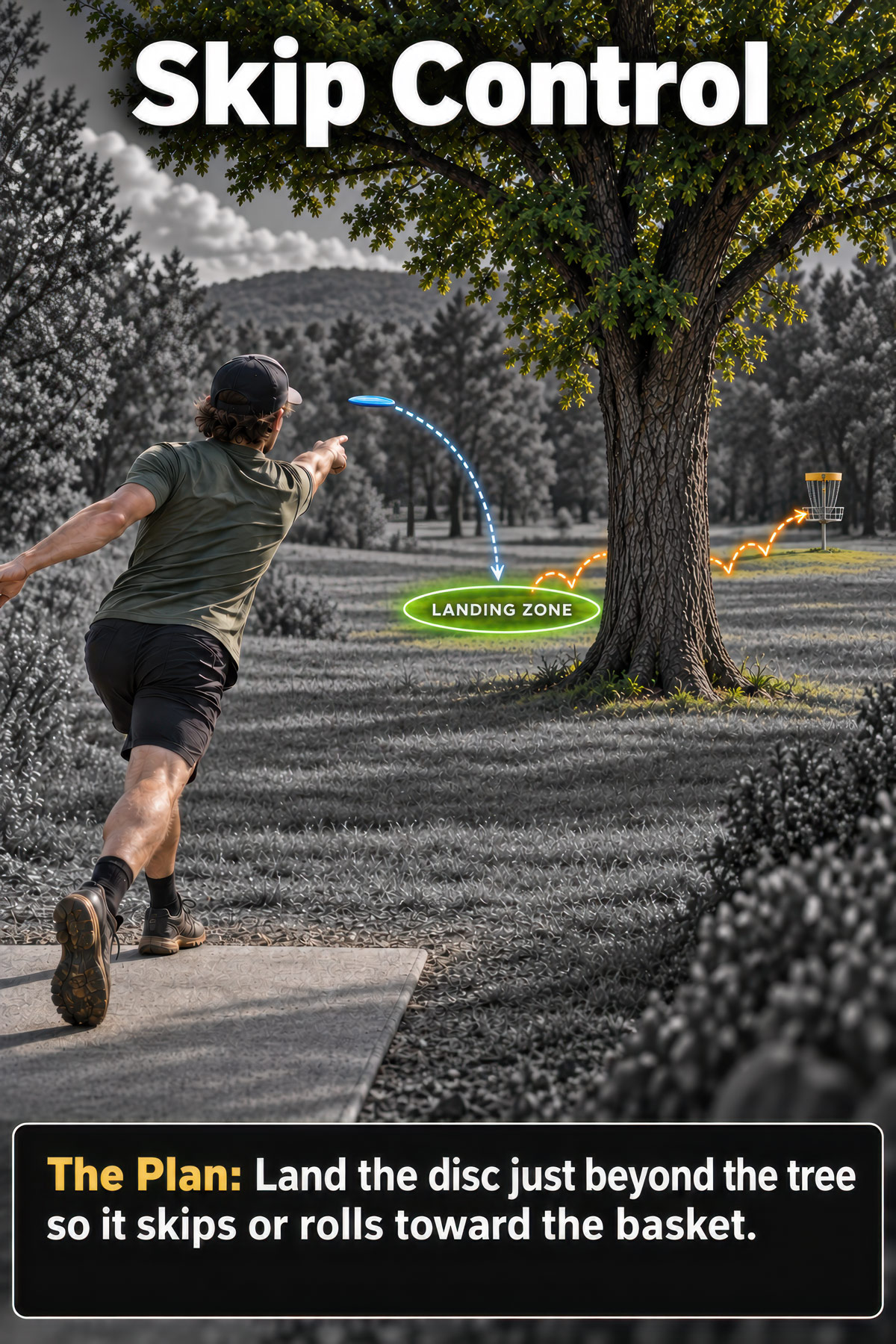
Definition: Skip control is the ability to influence how a disc moves after striking the ground. A player manages the skip through disc selection, speed, spin, release angle, nose angle, landing angle, and choice of landing area. Skip control may be used to produce a deliberate sideways finish, carry the disc around an obstacle, or reduce ground movement so the disc settles near the intended target. Because ground reactions vary, skip control means managing the likely result rather than guaranteeing an exact bounce.
Why It Matters: Skip control affects distance, placement, accuracy, and risk after the disc first contacts the ground. A well-planned skip can extend a drive, move an approach around an obstacle, reach a protected basket, or avoid a direct line through a narrow gap. An unwanted skip can carry the disc out-of-bounds, send it down a slope, move it away from the basket, or create a difficult comeback putt. Players improve skip control by considering disc stability, speed, landing angle, ground firmness, grass height, moisture, slope, and nearby hazards before choosing the shot.
Term Observations:
- Fast, overstable discs generally produce stronger and more predictable skips than slow or understable discs.
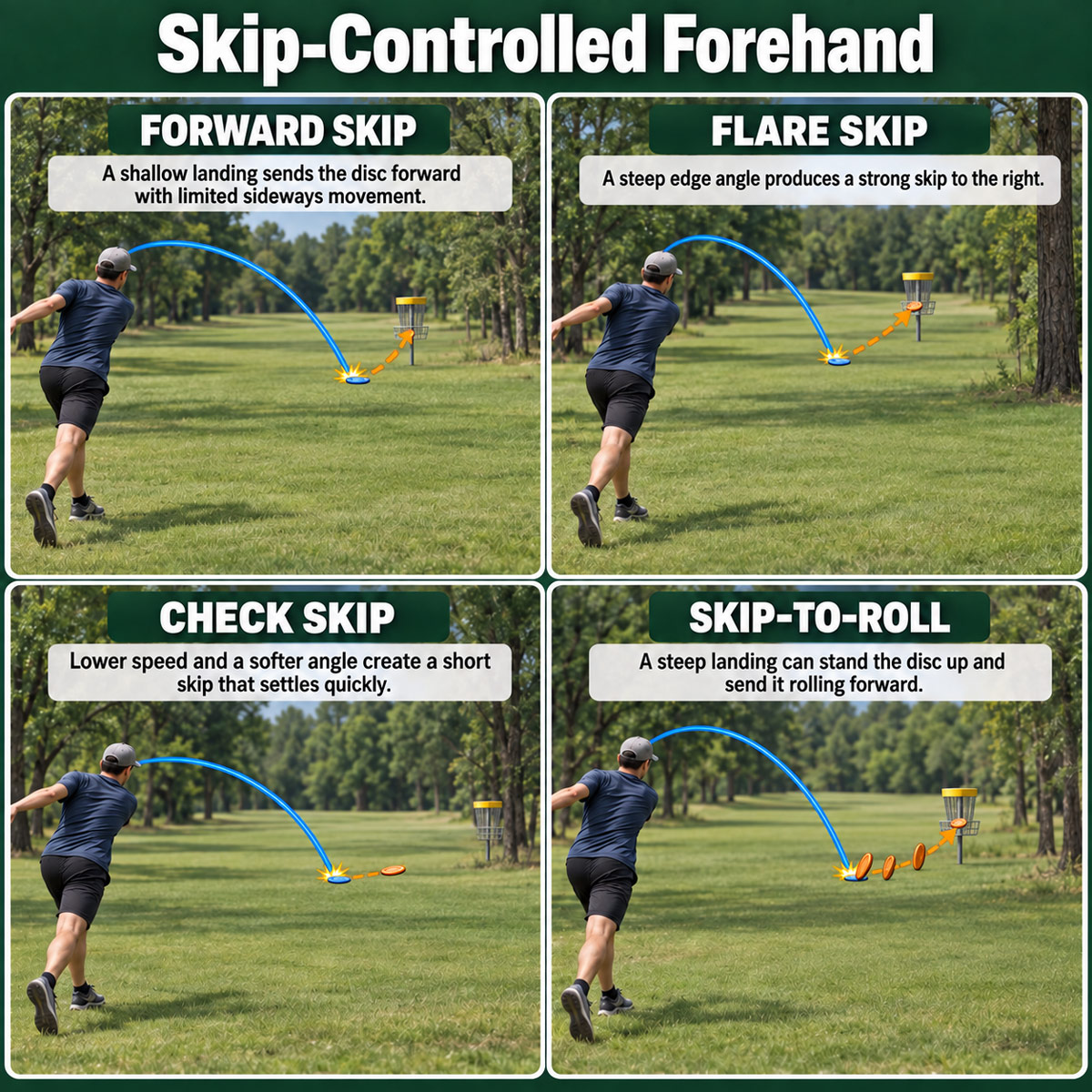
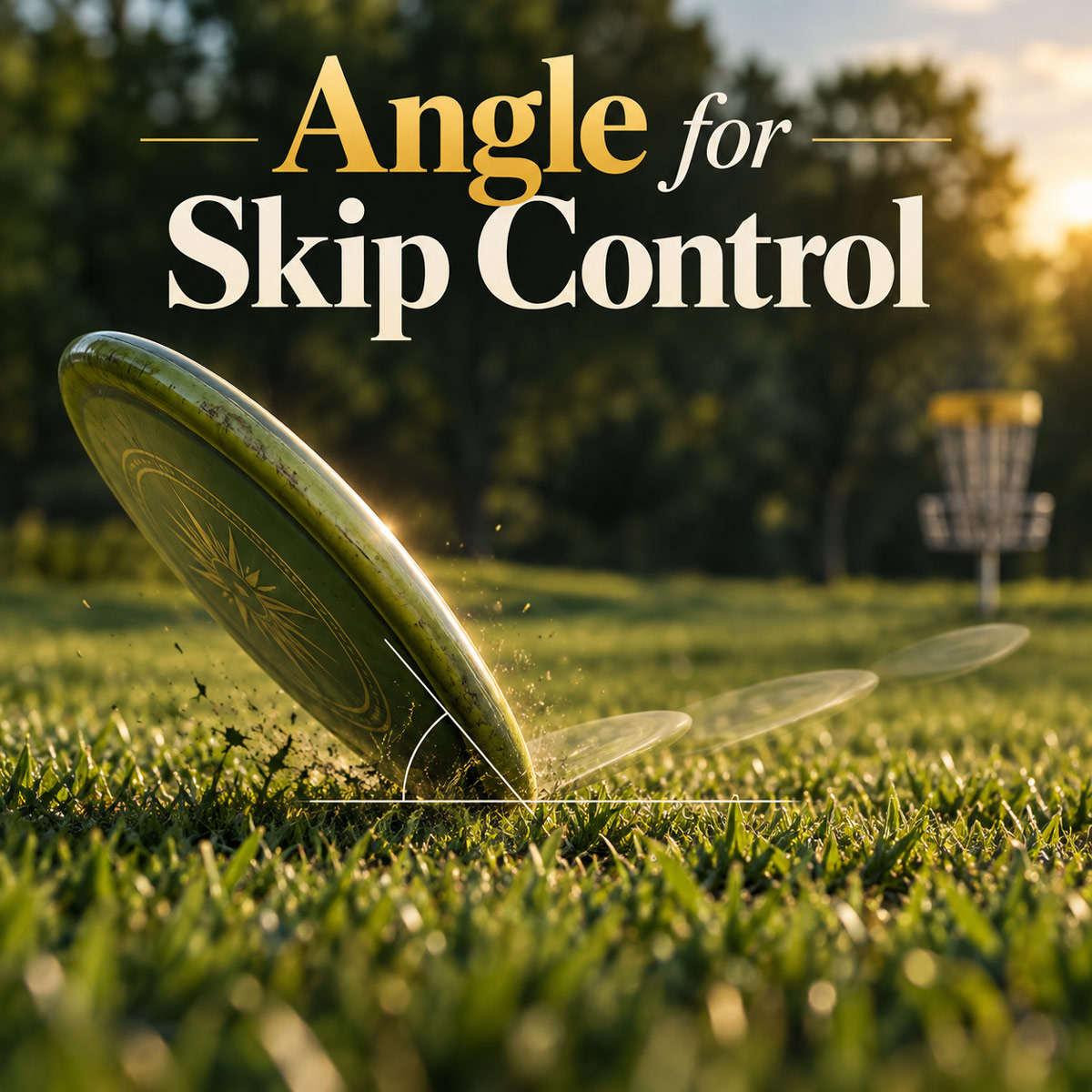
- A disc landing on a steep edge angle may skip sharply, while a flatter landing may slide, flare, or settle depending on the surface.
- Hard-packed soil, short grass, pavement, and dry ground encourage more ground movement than soft soil, thick grass, mud, or loose leaves.
- Skip control includes both creating a useful skip and limiting an unwanted one.
- Forehand and backhand throws normally skip in different directions because the discs spin and finish in opposite directions.
- Wind, roots, rocks, slopes, and uneven ground can make even a well-planned skip unpredictable.
- Players identify the intended landing area—not merely the final target—when planning a skip shot.
© 2026 North Georgia Canopy Tour Property, LLC d/b/a DiscLula. All rights reserved.