Ground Play
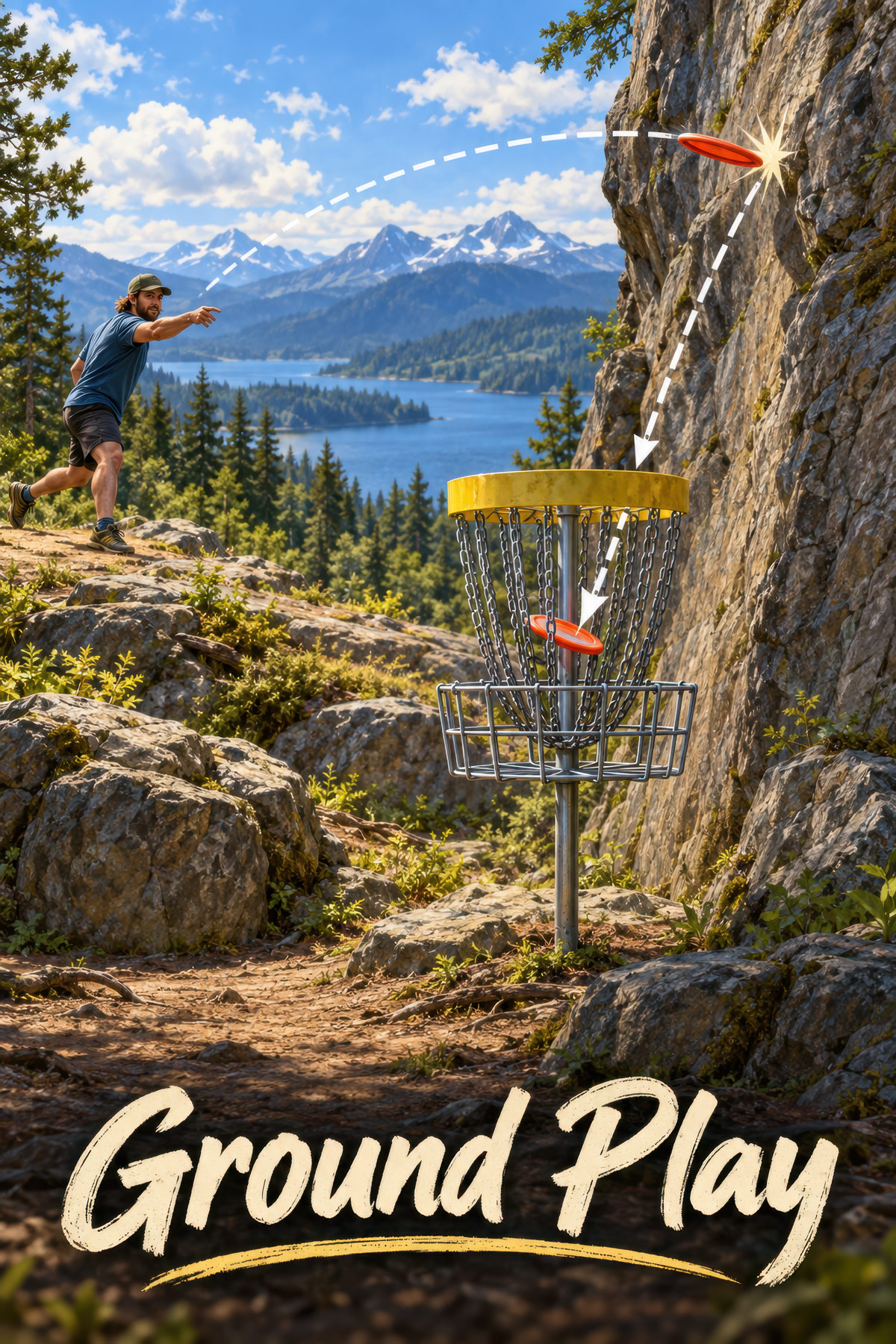
Definition: Ground play is what a disc does after it contacts the ground and before it comes to rest. It may slide across damp grass, skip off compacted dirt, catch an edge and roll, or settle almost where it landed. The outcome reflects an interaction among the disc’s remaining motion and angle, the surface, slope, and incidental features such as roots. Ground play differs from carry distance, which ends at initial ground contact, and from skip control, which focuses on shaping one particular type of rebound. The phrase includes both useful movement and unwanted surprises. No two landings are perfectly alike; reading the surface makes their range of possible outcomes easier to consider.
Why It Matters: A throw can arrive at its intended patch of fairway and still leave that patch. On a fast green, a skip or slide may transform a simple putt into a recovery; on an open fairway, a favorable forward slide can add useful distance. Ground play therefore belongs in shot planning, not merely in the excuses offered afterward. Watch the landing surface and ask how the disc is likely to meet it: flat, tilted, quick, or nearly stopped. A steep bank, wet grass, loose leaves, bare clay, or exposed rock may alter the result, sometimes unpredictably. The practical goal is not to forecast every bounce. Rather choose a landing with room for the aftermath—and understand that the next lie is established when the disc comes to rest.
Term Observations:
- The first touch is a comma, not a period.
- On a quiet-looking green, two neighboring patches may behave differently. A disc that sticks in damp grass can slide on worn earth just a pace away. Read the surface you expect to meet, not the general color of the fairway.
- A landing angle has consequences. A disc arriving nearly flat may behave differently from one touching on a steep edge. Yet the ground can still veto your plan; roots, grit, ruts, and slope refuse to become identical from throw to throw.
- A rollaway often begins with a small tilt at an unkind place. Around elevated or sloping greens, it can be worth preferring a wider, safer landing over the apparent elegance of a direct attack.
- Ground play is not always the villain. A sliding fairway shot may gain safe yards; an intentional skip may turn a corner a high throw cannot. The question is whether the surface movement serves the destination.
- Walk a practice area before experimenting. Throw the same familiar approach to a safe landing patch from several modest heights and watch the final resting places. Do not assume a dry afternoon reproduces a morning after rain.
- During a scored round, the rules are concerned with the disc's established position once it first comes to rest, subject to applicable exceptions—not the exact spot where the rim initially touched the ground. On a marked out-of-bounds hole, verify where the disc came to rest and the designated boundary.
- Sometimes the smartest airborne line is the one with the most forgiving ground beneath it. The course can offer a generous landing long before it offers a convenient basket.
References
References
- Riley O’Neill. Master Your Approach Game. Innova Disc Golf, 19 June 2026. View source. Accessed 14 October 2026.
- Jeff Panis. The Innova Pig & How to Throw Upshots that Stick. Innova Disc Golf, 15 February 2022. View source. Accessed 14 October 2026.
- Professional Disc Golf Association. 805.01 Establishing a Position. Official Rules of Disc Golf, rule last updated 31 December 2021; 2026 online rules. View source. Accessed 14 October 2026.
- Professional Disc Golf Association. 806.02 Out-of-Bounds. Official Rules of Disc Golf, rule updated 31 December 2025; 2026 online rules. View source. Accessed 14 October 2026.
- Jacob Arvidson. Disc Golf Discs Explained: How & When To Throw Distance Drivers. UDisc / Release Point, 28 August 2020. View source. Accessed 14 October 2026.
© 2026 North Georgia Canopy Tour Property, LLC d/b/a DiscLula. All rights reserved.